Trees in Water-Limited Landscapes
A field-based knowledge system for trees in high desert Southwest
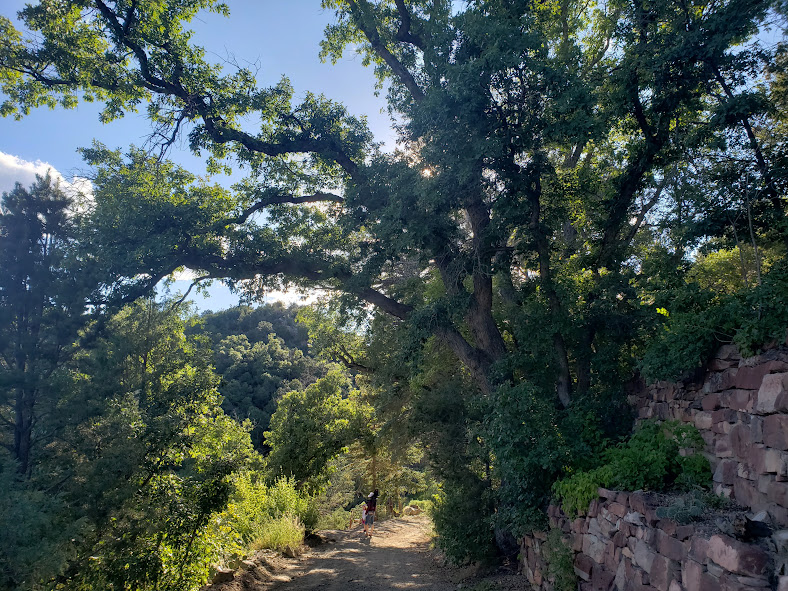
Documenting decisions that determine success at year 20, not year 2.
Rooted in observation, tradeoffs, and science, not shortcuts.
In hot, dry landscapes, early success often masks long-term failure. Only by planning for decades can trees reach their full potential.
Early survival often depends on artificial supports that mask structural problems in:
- Roots
- Soils
- Water Access
- Site Design
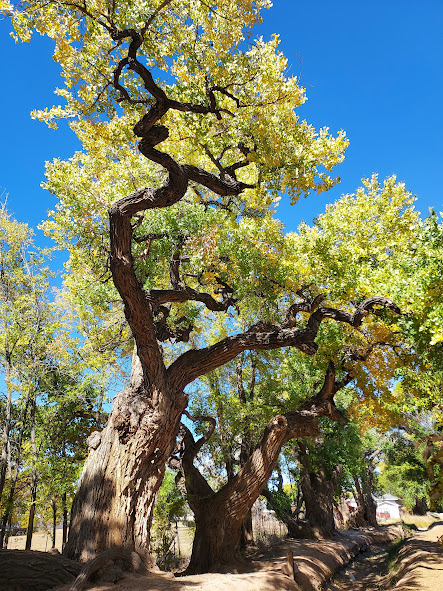
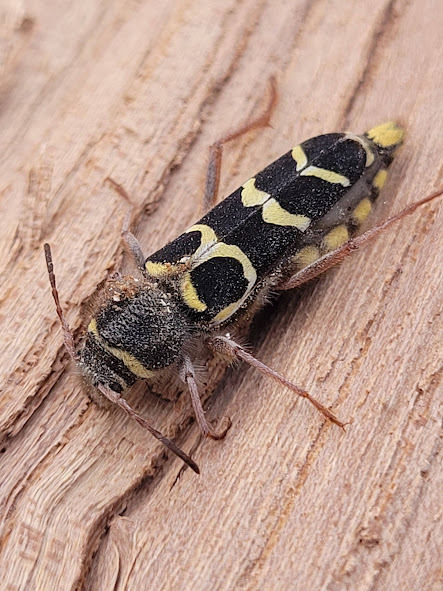
Trees are long-term infrastructure that can either become self-supporting or liabilities, depending on how we manage:
- Root Architecture
- Genetics
- Site Conditions
- Water
- Time
- Tradeoffs
How This System is Organized
Tree success in the Southwest is not a biological question alone—it is a systems-design problem unfolding over decades.
Working Standards
Define competent practice in water-limited landscapes.
Organized by decision phase (establishment, transition, long-term management, failure recognition), not topic.
Linked to:
Tools that support that decision
Relevant Field Notes
Systems explanations
Working Standards
├─ Establishment
│ ├─ Site Assessment & Constraints
│ ├─ Species & Genetic Fit
│ ├─ Root System Quality
│ ├─ Planting Depth & Geometry
│ └─ Initial Irrigation Design
│
├─ Transition
│ ├─ Irrigation Reduction & Withdrawal
│ ├─ Root Expansion Targets
│ ├─ Mulch & Surface Management
│ └─ Structural Pruning Timing
│
├─ Long-Term Management
│ ├─ Water Independence Benchmarks
│ ├─ Maintenance vs Intervention
│ ├─ Soil Degradation & Salt Accumulation
│ └─ Infrastructure Conflicts
│
└─ Failure Recognition
├─ Chronic Decline Indicators
├─ Hidden Root Constraints
├─ When Removal Is the Correct Decision
└─ Post-Failure Diagnosis
Field Notes
Document what actually happens over time, in place.
Organized by context (site type, species, intervention, time horizon, etc.), not lesson.
Linked to:
The Standard this observation informs or challenges
Field Notes
├─ By Site Type
│ ├─ Residential Lots
│ ├─ Streetscapes
│ ├─ Institutional / Municipal
│ ├─ Agricultural / Windbreaks
│ └─ Riparian / Edge Systems
│
├─ By Species
│ ├─ Native Trees
│ ├─ Desert-Adapted Introductions
│ └─ High-Failure Species
│
├─ By Intervention
│ ├─ Drip Irrigation
│ ├─ Runoff Capture
│ ├─ Soil Modification
│ └─ Structural Pruning
│
└─ By Time Horizon
├─ 1–3 Years
├─ 5–10 Years
└─ 15–30 Years
Systems
Why trees respond the way they do.
Where I explain mechanisms without prescribing action, like a field textbook.
Systems
├─ Water
│ ├─ Infiltration & Distribution
│ ├─ Timing & Seasonality
│ ├─ Salinity & Alkalinity
│ └─ Runoff as a Water Source
│
├─ Roots
│ ├─ Architecture in Arid Soils
│ ├─ Oxygen & Compaction Limits
│ ├─ Nursery Defects
│ └─ Root–Water Feedback Loops
│
├─ Soil
│ ├─ Structure vs Chemistry
│ ├─ Organic Matter Limits
│ ├─ Compaction & Fill
│ └─ Why “Soil Improvement” Fails
│
├─ Climate & Volatility
│ ├─ Heat Extremes
│ ├─ Precipitation Variability
│ └─ Establishment Risk Windows
│
└─ Time
├─ Deferred Costs
├─ Establishment vs Maturity
└─ Why Early Vigor Misleads
Tools
Tools to inform your choices, integrated with field knowledge and long-term outcomes.
├── Tools
│ ├── Water Calculator
│ ├── Spacing & Layout Tools
│ ├── Growth Forecasts
│ └── Risk / Tradeoff Analysis
“Acts of creation are ordinarily reserved for gods and poets, but humbler folk may circumvent this restriction if they know how. To plant a pine, for example, one need be neither god nor poet; one need only own a shovel.”
Aldo Leopold
Visionary Southwestern Ecologist
Stay in the loop
As we develop a field-based knowledge system for arid-land trees.