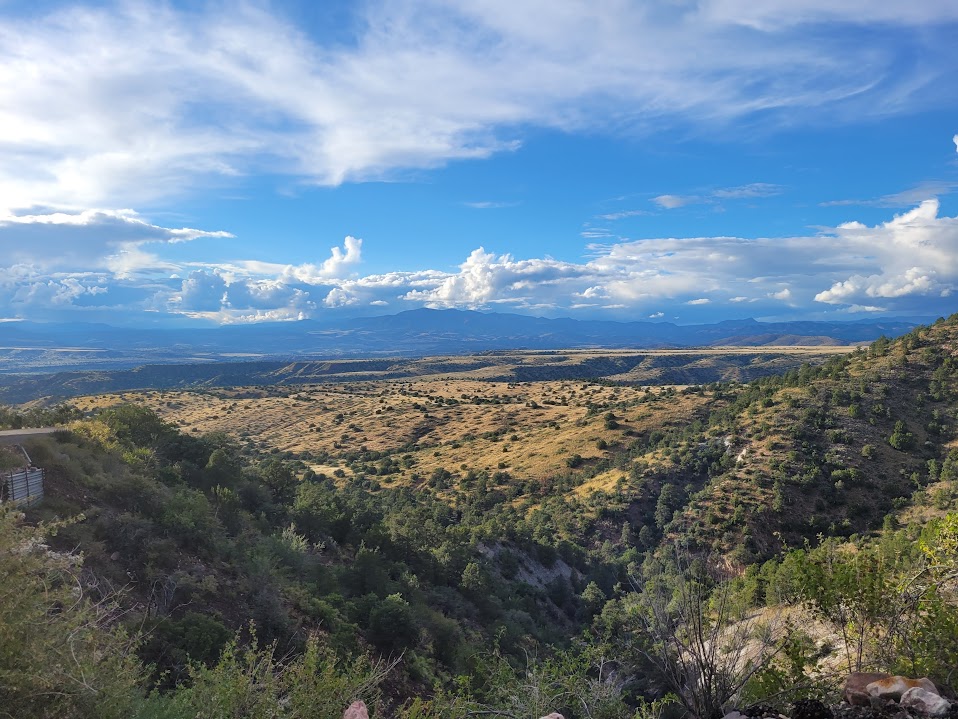
Piñon trees (Pinus edulis) are iconic in the Southwestern landscape, especially here in New Mexico. Known for their hardiness and ability to thrive in arid environments, they are a beloved feature of many yards and larger landscapes. However, even these tough trees can encounter issues that leave homeowners wondering, “What’s wrong with my piñon tree?” In this guide, we’ll explore some common problems that piñon trees face, how to diagnose them, and what you can do to help.
1. Environmental Damage
Many times, the problem with your piñon tree may not be caused by pests or disease but by environmental and cultural factors such as soil compaction, inappropriate planting (too deep) with girdling root systems left over from the time the tree was in a pot in the nursery, root damage (from trenching near the tree), or extreme weather events like long term drought or heat waves.
Symptoms:
- Lack of root flare at the base of the tree
- Compacted, dry soil around the tree
- Inappropriate or inadequate irrigation systems visible that are watering at the base of the tree
- Decline in overall health without obvious signs of pests or disease
Treatment:
- Mulch and irrigate the tree: Wood chips from the chip truck of an arborist applied to the soil around the tree are an excellent slow soil amendment and keep the soil around the tree moist and cool. Make sure your irrigation system has expanded since it was first installed at the time of planting–it should extend to at least the edge of the canopy of your tree.
- Correct girdling root systems: Remove roots that have grown perpendicular to the edge of the main trunk and are constricting the trunk. You can access the roots by carefully removing the soil around the base of the tree expose the trunk flare, or hire a professional to do this with a tool called an air spade. to encourage healthy new growth and prevent secondary infections.
- Remove rock mulch: Rock mulch retains and radiates heat to your tree, making drought and heat stress worse.
2. Piñon Needle Scale (Matsucoccus acalyptus)
One of the most common pests affecting piñon trees is the piñon needle scale. These tiny insects attach themselves to the needles of the tree and suck out its sap, leading to discoloration, stunted growth, and eventual needle drop.
Symptoms:
- Interior (oldest) needles turning yellow or brown
- Needles covered in small black or brown dots (the scales)
- Premature needle drop, often starting from the lower branches
Treatment:
- Spraying horticultural oil: A horticultural oil spray in the early spring can help control piñon needle scale. The oil suffocates the scales as they hatch, before they begin their feeding cycle. This spray must be impeccably timed to be effective, typically the first and second week of April in Central New Mexico.
- Manually removing egg masses: Mated females lay yellow eggs in clusters, held together by white, cottony webbing around the root collar, on undersides of large branches, or in cracks of rough bark. Sometimes egg masses are laid farther from the tree. Get outside after they are laid in Mid February and before they hatch at the beginning of April (in central New Mexico).
- Improving site conditions: Healthy trees are way less susceptible to this pest. See recommendations above.
- Applying a systemic insecticide: This only be attempted if you are planning on correcting the conditions which led to the pest in the first place. DIY options include products with the active ingredient Imidacloprid, or hire a professional for longer lasting solutions in the form of a trunk injection.
2. Piñon Twig Beetles
Piñon Twig Beetles (Pityophthorus spp. and Pityogenes spp.). This is a serious pest that can lead to rapid decline and death of the tree. In Pinon’s native habitat twig beetles are fairly harmless, removing weak and shaded branches in the canopy. In an urban setting, where the tree is often planted out of it’s native range into difficult conditions, the beetle attacks the tree’s vascular system on the branches and prevents it from transporting water to the needles
Symptoms:
- Sudden death of branches, starting at the bottom or weak side of the tree
- Needles turning reddish-brown and drying out
- Progress quickly, sometimes killing the tree within a few months
Treatment:
- Unfortunately, there is no effective treatment for Piñon Twig Beetle once it’s established. Early identification and removal of infected trees is critical to prevent spread to nearby Piñons.
- Prevention: Preventative insecticide treatments may help reduce the risk of infection if nearby trees are affected and tree is important enough to protect.
3. Drought Stress
Even though piñon trees are adapted to dry conditions, they are not immune to the effects of prolonged drought, which is becoming more common in New Mexico due to climate change. Lack of water weakens the tree, making it more susceptible to pests and diseases.
Symptoms:
- Needles turning yellow, then brown
- Sparse needle growth, especially on the outer branches
- Dieback of branches, particularly at the top of the tree
Treatment:
- Deep watering: If you suspect drought stress, water your tree deeply but infrequently. Piñons prefer slow, deep irrigation that mimics natural rainfall. Water at the drip line of the tree rather than right at the trunk.
- Mulching: Add a 2-3 inch layer of mulch around the base of the tree to conserve moisture. Be sure to keep the mulch a few inches away from the trunk to prevent rot.
4. Bark Beetles (Ips spp.)
Bark beetles are small insects that bore into the bark of piñon trees to lay their eggs. The larvae feed on the inner bark, disrupting the flow of nutrients and water. Bark beetle infestations often follow drought, as stressed trees are more vulnerable.
Symptoms:
- Small round exit holes in the bark
- Fading or browning needles, often starting at the top of the tree
- Piles of sawdust (called frass) around the base of the tree
- Pitch tubes or sap oozing from the trunk
Treatment:
- Removing infected trees: Once a tree is heavily infested, it usually cannot be saved. Prompt removal can prevent beetles from spreading to nearby trees.
- Preventative insecticide treatments: If bark beetles are a known problem in your area, a contact insecticide treatment in early spring can protect healthy trees from infestation. Systemic insecticides can be put in place as a preventative measure by a qualified professional.
5. Pine Tip Moths (Dioryctria sp.)
Piñon trees can receive damage to new growth at the tips of branches, this can be confused with more damaging twig beetle damage, but is typically found higher up at the top of the canopy. This is typically only seen on trees smaller than 15′ in height.
Symptoms:
- reddish-brown dying at the branch tips
- Stunted growth from repeated damage
Treatment:
- Don’t treat: If your tree is not already imperiled, we recommend ignoring this pest and improving conditions to increase it’s growth rate instead.
- Insecticides: Larvae that destroy needle tips wake up and start feeding in May, boring into the base of unopened buds. Make sure to plan for treatment prior or at this time.
Conclusion: How to Care for Your Piñon Tree
Piñon trees are tough, but they’re not invincible–especially when planted out of their elevational range. Early detection and proper care are key to keeping your tree healthy. If you’re ever unsure about what’s wrong with your piñon tree or need professional help, don’t hesitate to consult a local arborist. They can accurately diagnose the issue and recommend the best course of action.
By staying on top of your tree’s health and being proactive with care, you can ensure that your piñon tree remains a beautiful and iconic part of your landscape for many years to come.